You outgrew your data stack.
    Migrating it is holding you hostage.
    We can help.

    A like-for-like legacy warehouse migration means months manually translating SQL, pipelines, syncs, and BI content. We use our AI-powered Wire Framework to automate this translation—delivering your modernized platform faster, cheaper, and more reliably.

    See client results ›

    45 minutes · no obligation · you'll speak with a founder, not sales

    The Decision to Migrate Was Easy.
    The Execution is a Nightmare.

    You know you need to move to a modern data stack like BigQuery or Snowflake, but a like-for-like migration is notoriously slow and risky. To execute a flawless cutover without paralyzing your business, you need a partner with a fundamentally smarter blueprint. We are that partner.

    Your Challenges:

    The Infinite Timeline

    Manually translating SQL dialects, rerouting ingestion pipelines, and rebuilding BI dashboards piece-by-piece takes months. Deadlines inevitably slip, budgets balloon, and stakeholder patience vanishes long before the finish line.

    Roadmap Paralysis

    A major migration forces you to pull your best engineers and analysts off value-generating work. Instead of delivering new strategic insights or features, your smartest people are trapped doing repetitive, mechanical code translation.

    The Sunk-Cost Rollback

    Untangling deeply embedded business logic and downstream syncs gets so complex that momentum stalls. Teams get overwhelmed, often resulting in paying for two redundant platforms in parallel—or worse, abandoning the migration entirely.

    Our Solution: AI-Accelerated Platform Migration

    We use our AI-powered Wire Framework to automate the heavy lifting of translating your SQL, pipelines, and BI content. We deliver your fully modernized, like-for-like platform faster, cheaper, and with guaranteed reliability, ensuring a flawless cutover that keeps your internal team focused on building the business.

    Powered by the Wire Framework

    Wire is our delivery framework that turns Claude Code and Gemini CLI into a senior data engineer, embedding AI into every stage of the data migration lifecycle to lift, validate and cut over legacy warehouses, pipelines and dashboards on-time and on-budget.

    Wire Framework logoClaude Code logoGemini CLI logo

    Blueprint Your Cutover in Hours, Not Weeks

    Large-scale data platform migrations are less about writing SQL than managing risk. Thousands of models, connectors, orchestration workflows, semantic objects, dashboards and reverse ETL syncs all need to be tracked, migrated, regression tested and reassembled into a platform that behaves exactly like the one it replaces.

    Wire automatically deploys specialist AI-powered agents to discover and catalog all of your legacy platform components, identifying migration tasks and assessing their complexity, storing details in its migration inventory.

    Wire
    dispatches one agent per layer
    run concurrently
    each layer’s audit is independent of the others
    Audit agentsone per platform layerin parallel
    db-object-audit-generatedatabase objects
    every database and schema
    every table and view, with size and rows
    stored procedures and UDFs
    masking policies and tagged columns
    the full RBAC graph of roles and grants
    security-audit-generate— the same connection, different questionssecurity
    which roles hold which grants
    which columns carry PII tags
    Findings determine which IAM bindings and BigQuery policy tags target-setup creates.
    dbt auditdbt models
    assigns every model a complexity tier
    triviallowmediumhighblocked
    ingestion pipeline agentingestion pipelines
    details of every connection
    details of every pipeline
    reverse ETL agentreverse ETL
    details of every sync
    details of every destination
    …and one agent for every further layer— each independent until results are assembled
    MCP  legacy DW server · account · role · warehouse
    Legacy DW platform
    the system being migrated from — typically thousands of objects
    Databases & schemas
    Tables & views
    size and row count
    Stored procedures & UDFs
    Masking policies
    and their tagged columns
    Roles & grants
    the full RBAC graph
    MCP
    Ingestion pipeline platform
    connectionspipelines
    MCP
    Reverse ETL platform
    syncsdestinations
    Migration inventory
    a single file — a tabular record of every item, one row per object, typically thousands
    pendingtranslateddeferredmigratedfailed
    objecttypesize · rowsstatecomplexity
    tablemigrated
    UDFpending
    dbt modeldeferredmedium
    pipelinetranslated
    syncfailed
    ⋮  one row per object
    dispatch
    back-and-forth over MCP
    assemble
    1
    2
    3

    Evidence, Not Assurances

    We eliminate the guesswork from re-platforming. Our process ensures zero silent errors through rigorous, step-by-step validation:

    • Full Dependency Mapping: Complete snapshot of your existing architecture.

    • Deep Translation: Precise dialect translation handling complex edge cases (e.g., type coercion, division by zero).

    • Data Reconciliation: Automated auditing of row counts and value totals in a secure sandbox prior to PR.

    • Transparent Handover: Clean, manageable PRs backed by an auditable register of differences.

    Consultancy delivery workspace · stages 1–6
    Client repository & CI
    The only path into production code — client-reviewed, client-merged.
    Target production warehouse
    Only the client's scheduler ever writes here.
    Development sandbox
    isolated project on the target warehouse
    Migration inventory

    Tabular record of every item to be migrated — drives waves, sequencing and daily status.

    Item · type Wave orders_daily
    dbt model
    2 pii_row_mask
    security rule
    1 crm_contacts
    reverse ETL sync
    3 events_load
    ingestion pipeline
    1

    … and the rest of the estate

    1Snapshot & audit

    The client's legacy dbt package, written in the legacy dialect, is mirrored into the delivery workspace.

    An audit maps every model's features and dependencies, and batches the estate into waves.

    2Translation

    SQL and configuration rewritten to the target dialect under the agreed translation guide — explicit casts on joins, safe division, JSON handling, materialisation rules.

    Translated files live in the workspace, not the client repo.

    3Validation & lint gate

    Every translated model must parse and compile in the target dialect, and pass the engagement's lint rules.

    Nothing proceeds on translation alone.

    4Development build

    Built into a scratch dataset in the sandbox. A cost screen runs first: an estimated-scan check holds unusually expensive builds for authorisation.

    Proves the model runs against real data without touching production.

    deferred inputs — reads real production tables, read-only
    5Equivalence test

    Compares the migrated package's sandbox output with the source warehouse's contents — as much data as the sandbox holds: row counts, window endpoints, sums, distinct counts.

    Four exits
    Exact pass — proceed to release
    Qualified pass — read-timing only — proceed
    Availability gap — data request; model waits
    Defect — back to translation, re-run 3–5
    6Release assembly

    Passing models are grouped onto a branch of the client's repo. Four gates before release:

    1Whole project parses with the new models in place
    2Local replica of the client's CI passes
    3Branch rebuild against the production graph — sandbox writes only
    4Branch vs legacy re-check on every model

    A defect here pulls the model from the branch.

    External feeds & exports release on exact verdicts only
    7Review & merge

    The client reviews the pull request and their CI runs independently. Merge places the model in the production codebase.

    8Production build

    The client's scheduler builds the merged models into production on its normal cadence.

    9Post-merge verification

    Compares the production model's output in the target warehouse with the same model's output in legacy production. Internal models ship then verify — fixes go forward via a new pull request.

    Verdicts land in the tracking register → daily status reporting.
    Numbered data requests

    Availability gaps — source history missing on the target — become numbered requests to the client. The model waits; resolution re-runs stages 4–5. Gaps found anywhere in the flow land on this list.

    Legacy dbt packagethe client's existing model code
    Legacy warehouseread-only throughout
    × many models in parallel
    pass
    pull request
    client CI · merge
    contents mirrored in
    Single pooled runner — every legacy read serialises through one connection
    legacy DW contents
    sandbox output
    branch re-check
    legacy production output
    target production output
    defect — fix the translation, re-run 3–5
    fix forward — post-merge differences return as a new pull request
    availability gap — model waits
    resolved — re-run 4–5

    Machine Speed. Human Judgment.

    We don't throw armies of junior consultants at a migration. We deploy an orchestrated swarm of AI agents, executing around the clock, strictly governed by a senior human director.

    The Orchestrator: A central AI translates human strategy into parallel workflows, resolving dependencies and routing data models to where they need to go next.

    Specialized Swarms: Dedicated agent lanes work 24/7 with hard safety limits. They specialize entirely on discrete tasks: translating SQL dialects, building sandboxes, debugging data discrepancies, or assembling release branches.

    Automated Rework: Errors don't wait for a sprint review. Defective models are instantly routed back for translation rework, then gated and re-tested until row counts and outputs match the legacy source perfectly.

    Absolute Transparency: Machines do the mechanical heavy lifting; humans make the commercial and strategic judgment calls. Every agent action is audited, checked against real data, and logged in a transparent register before your team reviews a single line of code.

    Tier 01
    Release director
    One human
    Client communications
    Rulings and waivers
    Approval gates
    Judgment catches
    Fleet-size and budget decisions
    Rulings, waivers and approval gates
    Judgment catches
    Tier 02
    Orchestrating session
    One Fable-class session
    Dispatches and monitors lanes
    Owns the register (single writer)
    Consolidation and backstop passes
    Assembles PR evidence
    Amends process docs the day a ruling lands
    Dispatch
    Monitoring and PR evidence
    Lane 01
    Translate wave models
    Lane 02
    Validate and lint
    Lane 03
    Build playground copies
    Lane 04
    Run equivalence battery
    Lane 05
    Verify post-merge
    Lane 06
    Drill count divergence
    Lane 07
    Rebuild sync audit
    Lane 08
    Check branch copies
    Tier 03
    Lane agents
    6–12 concurrent
    Stage-scoped work: translation, validation and evidence, one stage at a time.

    Selected Work

    AI-Powered Data Migration in-Practice

    0
    TB

    of data migrated and verified in production

    0
    dbt models

    translated from legacy to target SQL dialect

    0
    days

    to complete the platform migration

    Ready to kick-start your data migration project?

    A discovery call is the first step to understanding if we're the right fit to move your data capabilities forward.

    See client results ›

    45 minutes · no obligation · you'll speak with a founder, not sales

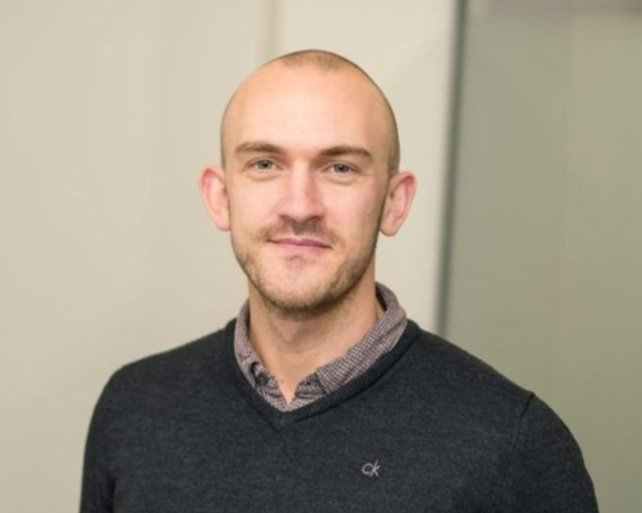
    Mark Rittman, CEO of Rittman AnalyticsLewis Baker, COO of Rittman Analytics

    What happens on the call

    with Mark Rittman, CEO or Lewis Baker, COO - not a salesperson

    • We ask about your stack, your team and what you're trying to achieve.
    • You get an honest read on where you are — and what we'd do next, whether or not that involves us.
    • No pitch deck. If we're not the right fit, we'll say so and point you somewhere better.